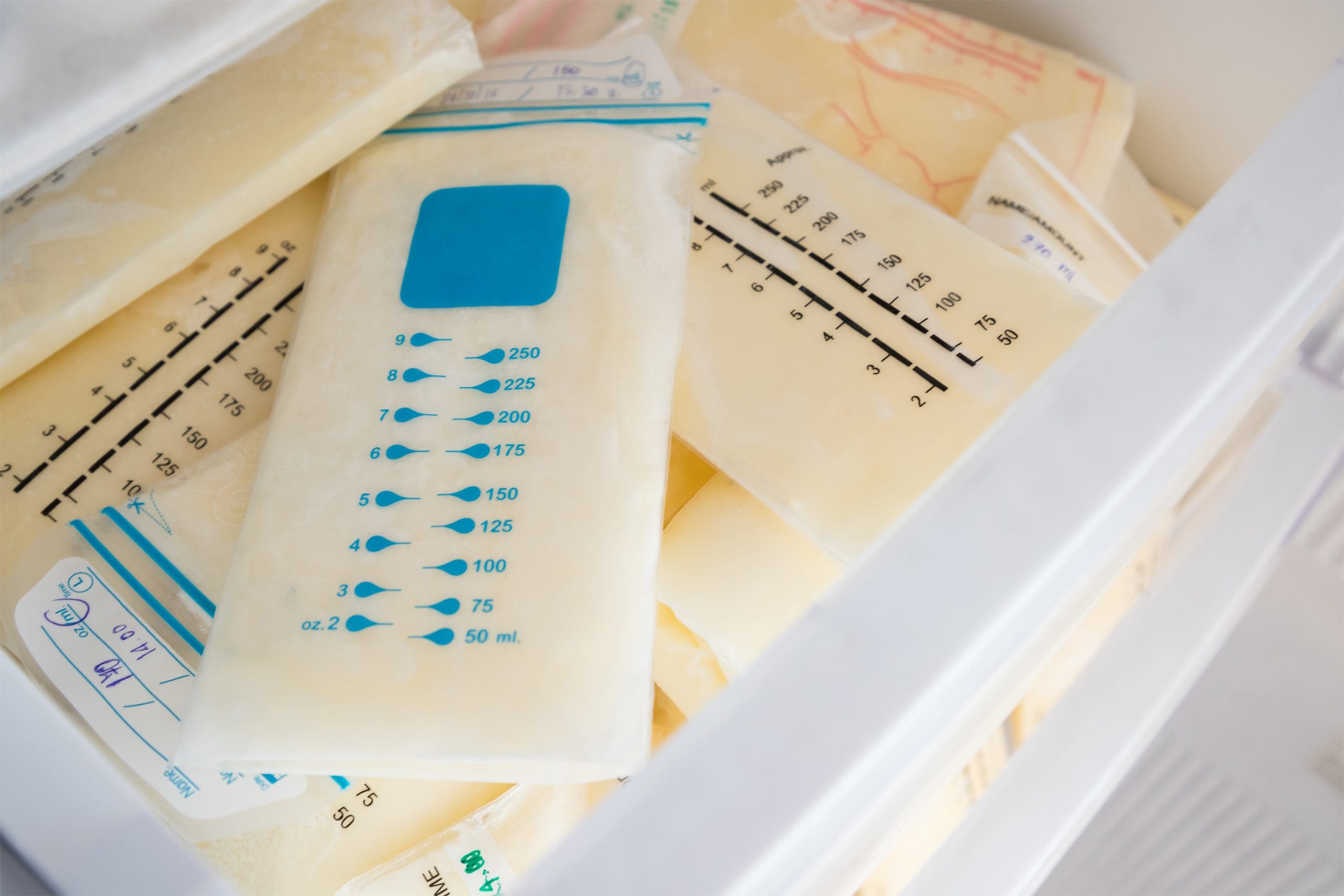
Donating milk can make a life-saving impact for babies born every day.
Even just one ounce of donor human milk can feed a premature baby for an entire day, saving that baby’s life.
Babies in hospital neonatal intensive care units (NICUs) depend on the life-saving nourishment of donor human milk when their own mothers’ milk is not available. It protects babies from illness and infection.
Donor human milk is essential for any baby with a weakened immune system or special dietary needs. Donor human milk is also used in the cases of adoption, surrogacy, the birth of multiples, or when a mother is ill or taking certain medications.
It’s a gift that lasts a lifetime!
“Mothers’ milk is liquid gold to babies who are fighting for their lives. It can mean the difference between life and death.”
–Dr. Jeffrey Hanson, Neonatologist Presbyterian/St. Luke’s Medical Center
Why Donate to Mothers’ Milk Bank

Support Premature & Fragile Babies
80-90% of our donor human milk goes directly to neonatal intensive care units—meaning your milk will help the most fragile babies who really need it to grow and thrive. The other 10-20% plays a crucial role in jumpstarting lactation for parents and supporting infants who otherwise wouldn’t have access to the nutritional benefits of human milk.

The Highest Safety Standards
Human milk is a precious, life-saving resource, and we never take it for granted. From thoughtfully screening donors to carefully handling milk in our ISO-7 Certified Clean Room lab, we take every step possible to make sure donated milk is safe for babies while retaining the nutritional benefits that make it so magical in the first place.

An Organization with Heart
As a nonprofit milk bank, we’re here to better our community and strive to get milk to as many fragile babies as possible. We operate under the guidelines of the Human Milk Banking Association of North America (HMBANA) and are part of the Colorado-based nonprofit Rocky Mountain Children’s Health Foundation. We’re all about doing good and helping babies.
What does it take to become a milk donor?
Mothers’ Milk Bank is a member of the Human Milk Banking Association of North America (HMBANA) and follows their strict guidelines and restrictions for screening donors for breast milk donations. If you are interested in becoming a donor, please review the criteria below.
To be be eligible as a human milk (breast milk) donor, you must:
- Be confident in your milk supply and produce milk in excess of your own baby’s needs
- Be willing to donate a minimum total of 100 ounces throughout your time as a donor with us
- Take only approved medications, vitamins, and herbal supplements
- Not have any risk factors that prohibit you from donating blood (there are exceptions to this rule – please contact us if this applies to you).
- Consume less than 300 mg of caffeine per day (2-3 cups of coffee)
- Not express milk for donation within 6 hours of drinking any alcohol
- Be motivated to practice exceptional hygiene and carry out careful milk collection and storage methods.
- Be willing to undergo blood testing
- Be less than 24 months postpartum when collecting the milk
If these items all apply to you, please give us a call at 303-869-1888 to begin your verbal screening.
There are some exceptions to these guidelines. If you would like to discuss your eligibility with us, please contact us at 303-869-1888 or toll-free at 833-234-0555.
What happens to your milk when you donate
At Mothers’ Milk Bank, we make the donation process as easy as possible for our donors, all while adhering to the highest safety standards in the industry. Here, it’s all about giving each donor, each ounce of milk, and each infant in need the love and care they deserve.
Three cheers for our donors!
Mothers’ Milk Bank wouldn’t be able to do what we do without our incredible donors.
Have a donation story to share? We’d love to hear it!

“When my first daughter was born in 2019, I developed sepsis right after delivery and had to spend the first day in the ICU. During that time, she received donor milk. Even after I was discharged and began breastfeeding, she was still supplemented with donor milk until my milk came in. Breastfeeding eventually went well, but I was so grateful for the donor milk during such a scary time. With my second daughter, born under much calmer circumstances, I’ve been able to pump enough to donate and help other babies in need.”
“My son was small for gestational age and had low blood sugars after birth. He received donor milk while his blood sugars were monitored in the NICU. I didn’t know that human milk was an option! It brought me great comfort to know that my son was starting life with the advantages and benefits of human milk. I want to pay it forward by donating to another mom and her baby as well.”
“My son was born prematurely at 34 weeks after I was diagnosed with severe pre-eclampsia. He was taken to the NICU, and since I was being treated with magnesium, I couldn’t visit him for the first 24 hours. Choosing donor milk was the first decision we made for our tiny preemie, and we were so grateful to have it during his early days. Now, as my son approaches his first birthday, I donate milk to support other NICU parents, nourish babies in need, and give thanks to the healthcare workers who cared for us.”
“I became a donor because someone else donated to us. After delivery, my baby was fed donor milk because my milk supply hadn’t come in yet. We were very fortunate to have donor milk readily available. I knew that when my supply came in, I would do my best to pass it along. I’m thankful that I have a good supply of milk now and want to donate to help other families in need. It’s true what they say, it takes a village.”
“I’m currently nursing and pumping for my third sweet baby, Ava. I’m very lucky to have successfully breastfed all three of my kids over a year and share my labor of love to babies in need! I’m passionate about breastfeeding, especially as a working mom, and I’m so grateful to the staff at Mothers’ Milk Bank making this process so simple—even for an out of state donor!”
“A Mothers’ Milk Bank drop off location was recently opened in my hometown and I knew I wanted to donate my excess milk. With a surplus of milk, helping another baby live and thrive is one of the greatest gifts to give another family. It is the hardest job I have ever loved and would do it a thousand times over again! Each time I drop off a donation it warms my heart to be able to do something of this importance. I am grateful for my babies for giving me this opportunity.”
“I am a mother to four beautiful little girls. My first baby I struggled to produce enough breastmilk and had to supplement with formula. Fortunately enough, my last three breastfeeding journeys I have been able to donate to babies in need. Even though it’s hard work, it’s so heartwarming to know we can help other babies and moms in need or who struggle to produce enough.”
“On February 3, my husband and I were blessed with our son, Jonah. Jonah was admitted to the neonatal intensive care unit shortly after birth. While he was there, I pumped breast milk every 3 hours and froze the excess milk. Jonah peacefully passed away in our arms after just 67 blessed days. After Jonah died, we were left with a deep freeze that was packed full of breast milk. I knew immediately that I wanted to donate Jonah’s milk to other babies who were in need, and we donated over 2,400 ounces of breast milk. Jonah touched the lives of many throughout his short time with us. It is very rewarding to know that he continued to touch the lives of many through the gift of his milk.”
“Without donor milk, I imagine the first few weeks of Bennett’s life would have been very different. I fully believe in the value and importance of breastmilk, and the fact that we had the ability to use donated milk with our kids when they need it was wonderful. The idea that someone else could be in the same spot and need it made us feel strongly to give back.”
Did you receive milk for your baby? Or donate? We’d love to hear your story!
Please note: Mothers’ Milk Bank is a 501(c)(03) nonprofit organization; however, just like other donations such as blood or tissue, human milk is not currently tax deductible.