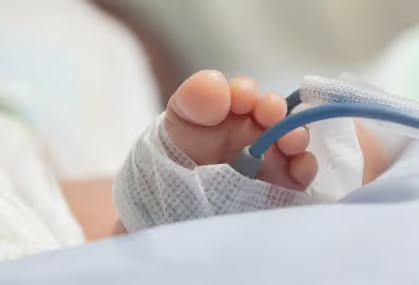
For premature infants, the first days and weeks of life are often fraught with challenges, as their tiny bodies continue to develop outside the protective environment of the womb. One of the most serious threats these fragile newborns face is necrotizing enterocolitis (NEC), a devastating gastrointestinal disease that primarily affects preterm infants. However, research has shown that one of the most effective ways to reduce the risk of NEC is by providing these infants with human milk. If their parent’s own milk is not available yet, as can often be the case for premature babies, donor human milk makes an incredible difference.
What is Necrotizing Enterocolitis?
Necrotizing enterocolitis is a condition that leads to inflammation and, in severe cases, the death of intestinal tissue. It can result in life-threatening complications such as sepsis, perforation of the intestines, and long-term digestive issues. NEC typically occurs in preterm infants due to their underdeveloped immune systems and immature digestive tracts, which make them more susceptible to harmful bacteria and inflammation.

The Role of Human Milk in Necrotizing Enterocolitis Prevention
Studies have consistently demonstrated that human milk offers greater protection against NEC than formula. This is due to its unique composition, which includes beneficial components such as:
- Immunoglobulins and Antimicrobial Proteins: These help strengthen the infant’s immune system, reducing the risk of infections that can contribute to NEC.
- Human Milk Oligosaccharides (HMOs): These prebiotic compounds promote the growth of beneficial gut bacteria, which play a crucial role in protecting against harmful pathogens.
- Anti-inflammatory Properties: Human milk contains bioactive factors that help regulate inflammation, reducing the risk of excessive immune responses that can damage the intestines.
Donor Human Milk: A Vital Alternative
While a parent’s own milk is always the best option, it is not always available due to various medical or personal reasons. In such cases, donor milk, sourced from screened and healthy lactating parents, serves as the next best alternative. Donor milk is carefully pasteurized and processed in human milk banks to ensure safety while preserving many of its protective benefits.
Non-profit milk banks like Mothers’ Milk Bank play a crucial role in providing safe, donated human milk to hospitals and NICUs. They work with donors to collect, pasteurize, and distribute milk to premature infants who need it most. Several studies have shown that preterm infants who receive donor human milk instead of formula experience significantly lower rates of NEC. As a result, many neonatal intensive care units (NICUs) now prioritize the use of donor milk when a parent’s own milk is limited or unavailable.
Supporting Milk Donation and Awareness
Donor milk is only possible because of generous milk donors who choose to share their surplus milk. Mothers’ Milk Bank helps facilitate this process by making it as easy as possible for mothers to donate and ensuring that their milk reaches infants in need—but there’s a lot you can do to help, too.
Here are some of the ways you can support the use of donor milk:
- Spread the Word! Encouraging more families to donate breast milk can help ensure that all vulnerable premature infants have access to this life-saving resource.
- Ensuring donor milk is in your facility. Healthcare providers and policymakers play a crucial role in supporting milk banks and integrating donor milk programs into NICUs across the country.
- Donate! Whether donating milk or funds, you can help make donor milk available for more babies across the country.
NEC remains one of the most severe conditions affecting preterm infants, but its risk can be dramatically reduced through the use of human milk. At Mothers’ Milk Bank we believe that by raising awareness and increasing access to donor milk, we can give these tiny fighters a stronger start in life.